We earn commissions from featured brands, which impact the order and presentation of listings
Advertising Disclosure

This website is an independent, advertising-supported comparison service. The product offers that appear on this site are from companies from which this website receives compensation. This compensation may impact how and where products appear on this site (including, for example, the order in which they appear).

This website does not include all card companies or all card offers available in the marketplace. This website may use other proprietary factors to impact card offer listings on the website such as consumer selection or the likelihood of the applicant’s credit approval.

This allows us to maintain a full-time, editorial staff and work with finance experts you know and trust. The compensation we receive from advertisers does not influence the recommendations or advice our editorial team provides in our articles or otherwise impacts any of the editorial content on The Smart Investor.

While we work hard to provide accurate and up to date information that we think you will find relevant, The Smart Investor does not and cannot guarantee that any information provided is complete and makes no representations or warranties in connection thereto, nor to the accuracy or applicability thereof.

Learn more about how we review products and read our advertiser disclosure for how we make money. All products are presented without warranty.

Compare Banks » Comparing CD Rates: Chase vs Bank Of America

Comparing CD Rates: Chase vs Bank Of America

Chase and Bank Of America offer competitive CD rates only on specific terms. Compare rates, minimum deposits and early withdrawal penalty.
Author: Baruch Mann (Silvermann)
Interest Rates Last Update: October 15, 2025
The banking product interest rates, including savings, CDs, and money market, are accurate as of this date.
Author: Baruch Mann (Silvermann)
Interest Rates Last Update: October 15, 2025

The banking product interest rates, including savings, CDs, and money market, are accurate as of this date.

We earn a commission from our partner links on this page. It doesn't affect the integrity of our unbiased, independent editorial staff. Transparency is a core value for us, read our advertiser disclosure and how we make money.

Table Of Content

Certificates of Deposit (CDs) are a popular investment option for customers looking for a safe and secure way to grow their money. Two of the largest banks in the United States, Chase and Bank of America, offer CDs with varying rates and terms.

In this article, we will compare the CD rates offered by Chase and Bank of America, as well as other important factors such as minimum deposit requirements, how their CDs work, and early withdrawal penalties.

By understanding the differences between these two banks’ CD options, you can decide which bank and CD term best fits your needs.

Chase
Bank Of America
CD Range
0.02% – 3.80%
0.03% – 3.75%
Minimum Deposit
$1000
$1,000
Early Withdrawal Penalty
90-365 days of interest
Terms
1 to 120 months
1 – 120 months

How Do CD Rates Compare?

For short-term CDs (6-12 months), Bank Of America generally offers higher rates than Bank of America. However, for long-term CDs (24-120 months), Chase CD rates are higher than BoFa for some terms.

Keep in mind that the Bank Of America higher rates is on their featured CDs – means a higher minimum deposit of at least $10,000.

In cases with a range of interest, the lower rate is available for those who deposit up to $100,000, and the higher rates are for those who deposit more than $100,000 (for both Chase and Bank Of America)

CD Term
Chase APY
Bank Of America APY
3 Months
1.01%
3.51%
6 Months
0.75%
3.75% (Featured, 7 months)
9 Months
0.50%
0.03%
12 Months
2.00%
2.50% (Featured, 13 months)
18 Months
2.00%
0.03%
24 Months
2.00%
2.00% (Featured, 25 months)
30 Months
2.00%
0.03%
36 Months
2.00%
0.03%
48 Months
2.00%
0.03%
60 Months
2.00%
0.03%
120 Months
2.00%
0.03%
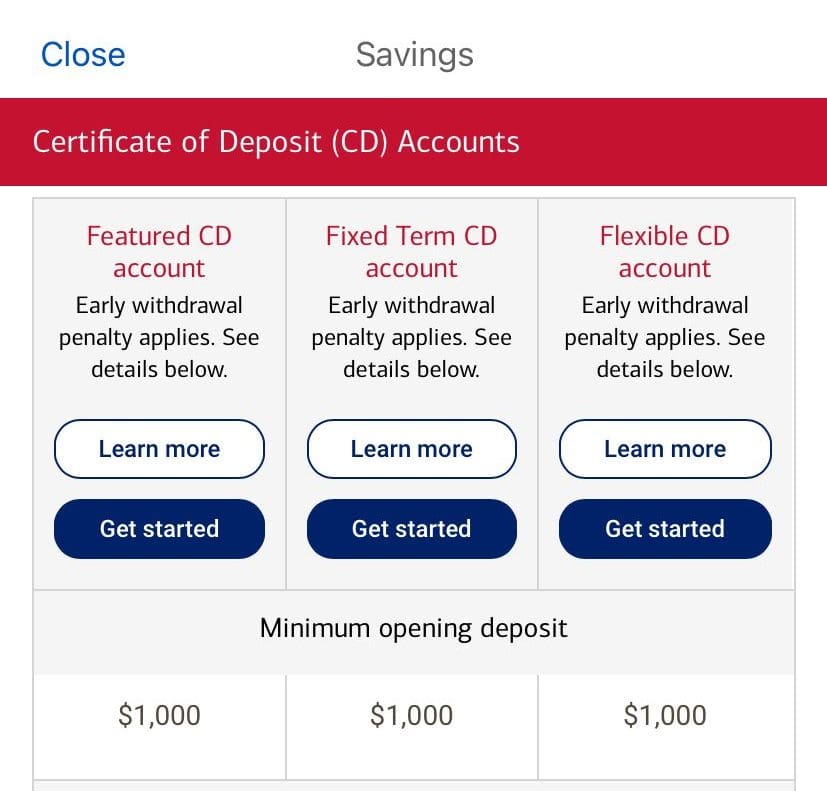
BofA CD Options
BofA CD Options (Screenshot from Bank Of America app)
Top Offers From Our Partners

UpgradeLogo

Savings Rate: 3.42% APY
CIT-Bank-Logo
Savings Rate: Up to 3.85% APY

live-oak-bank-logo

Savings Rate: 4.00% APY
Quontic bank logo
Savings Rate: 3.75% APY

valley direct logo

Savings Rate: 3.50% – 4.1%  APY APY
Advertiser Disclosure
The product offers that appear on this site are from companies from which this website receives compensation.

Bank of America CD Vs Chase CD: How They Work?

At present, Bank of America has two types of CD products on offer.

  • The first is the fixed-term CD which is a conventional CD that offers terms ranging from 28 days to 10 years. Regardless of the term, a minimum balance of $1,000 is required to open an account, and the interest rates are determined by both the initial deposit and the term selected.
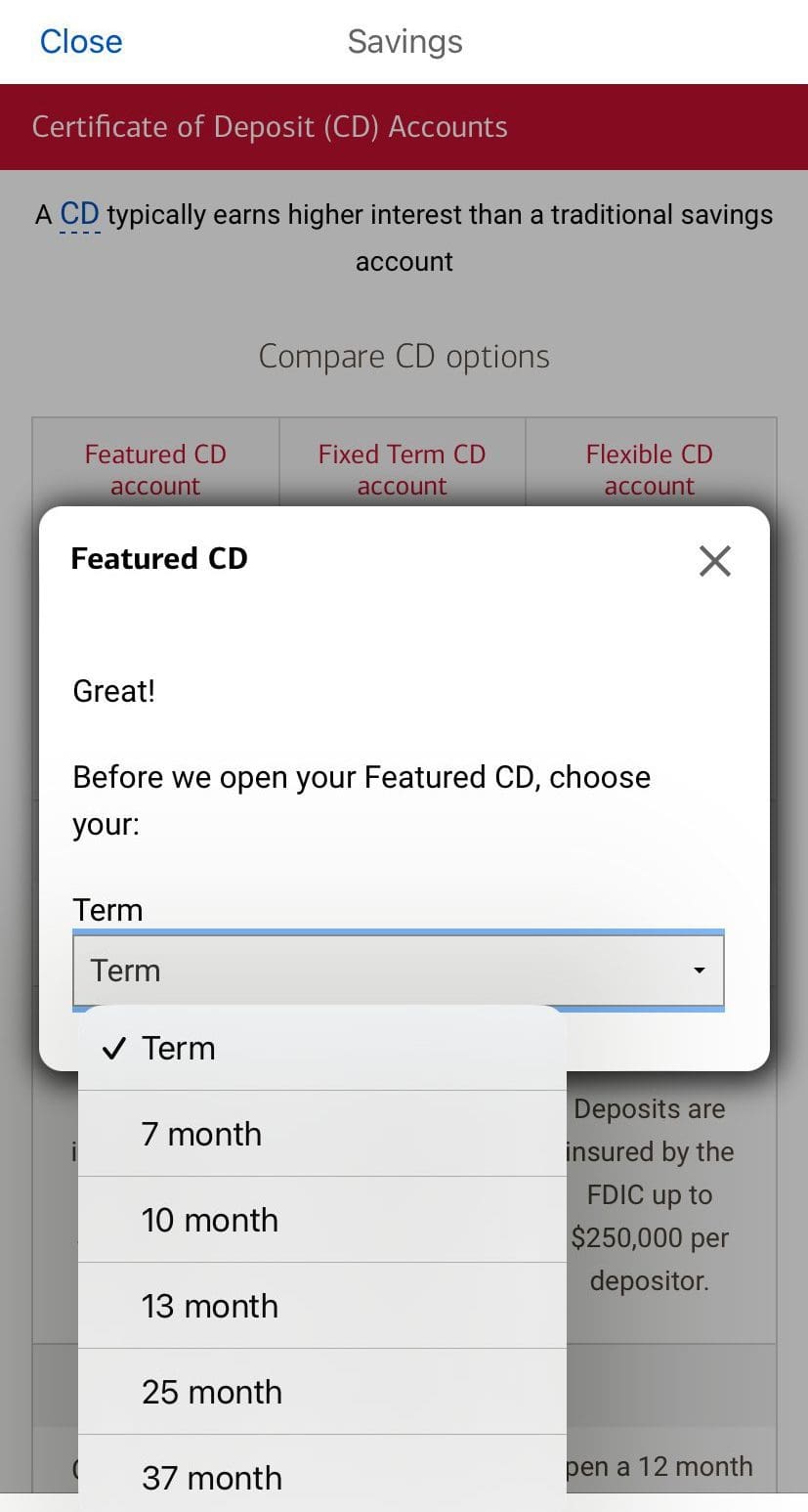
  • The second CD product is Bank of America’s Featured CD, which is tailored for customers who can afford a higher initial deposit. To open this account, you must deposit a minimum of $10,000, and you can choose from various term options ranging from 7 to 37 months.

Chase provides a wide range of CD terms, from as short as one month to as long as ten years. Chase CDs earn daily compounded interest, and depending on the term, you can choose to have the interest credited to your account on a monthly, quarterly, semi-annually, annually, or at maturity basis

BofA feature CDs
BofA feature CDs (Screenshot from Bank Of America app)

Chase vs. BoFa: Compare CD Early Withdrawal Penalty

Remember that withdrawing funds before maturity will result in a penalty, and the penalty amount will differ based on the term of your CD.

When it comes to the early withdrawal penalty, Bank Of America seems to be more flexible than Chase. For most CD terms, you’ll less with Bank Of America compared to the penalty Chase charges in case of an early withdrawal.

So, if you may need the money  – Bank Of America may be a better option for you.

CD Term
Chase
Bank Of America
3 Months
90 days of interest
90 days of interest
6 Months
180 days of interest
90 days of interest
9 Months
180 days of interest
90 days of interest
12 Months
180 days of interest
18 Months
180 days of interest
24 Months
365 days interest
180 days of interest
30 Months
365 days interest
180 days of interest
36 Months
365 days interest
180 days of interest
48 Months
365 days interest
180 days of interest
60 Months
365 days interest
365 days interest
120 Months
365 days interest
365 days interest

Which Is Better For 1-Year?

For 1 year CD, the rates are quite similar. If you have a relationship with Bank Of America, you may earn a bit higher interest than what you can get with Chase.

If you’re looking for 1-year CD, you can take a look and compare CDs here.

About Chase Bank

Despite their modern and trendy image, Chase Bank is actually one of the oldest banks in the United States, dating back many decades.

As the consumer branch of JP Morgan Chase, one of the largest banks in the country, Chase has managed to weather the storm of financial upheaval that has affected many other major banks in recent years. In fact, JP Morgan Chase emerged as a winner during the 2008 Wall Street collapse, acquiring the remains of Washington Mutual.

Additionally, in recent years, Chase has been expanding its physical presence by building almost 200 new branches, with a particular focus on states in the eastern half of the country, such as Florida and Georgia. 

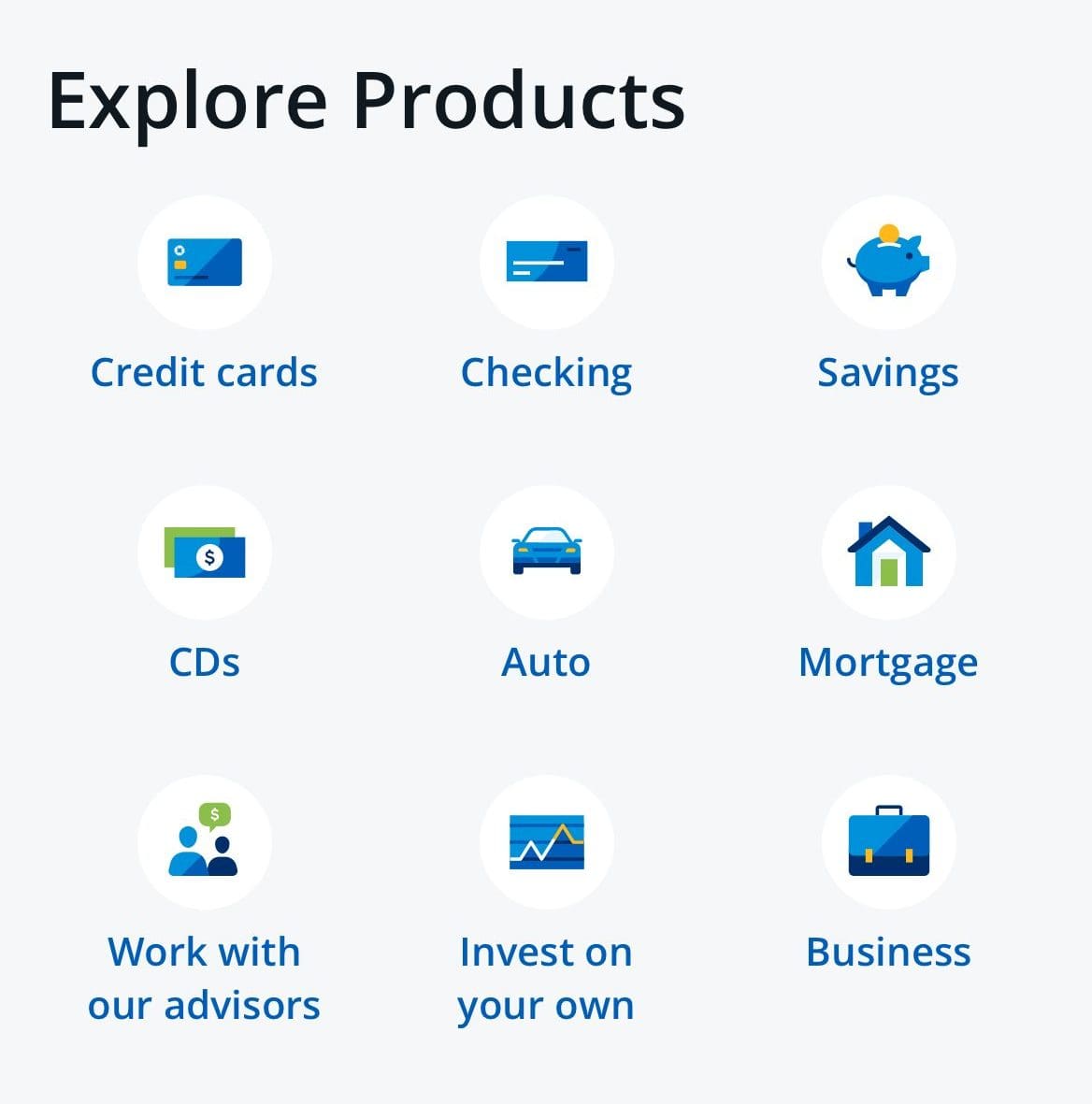
Chase explore banking products
Chase app features (Screenshot taken by our team from Chase app)

About Bank Of America

Bank of America has a long history that dates back 240 years. Today, it has grown into a global financial services company and serves half of all households in America. The bank has approximately 67 million clients.

Bank of America offers unparalleled access to financial services with a vast network of approximately 3,900 branches and 16,000 ATMs. The bank provides low minimums to open checking or savings accounts, and offers higher rates and lending discounts through its Preferred Rewards program. However, there are some drawbacks to using Bank of America’s services, including the absence of high-yield savings account options and no reimbursement of ATM fees.

How We Compare CDs: Methodology

In our comprehensive certificate of deposit (CD) comparison, The Smart Investor team meticulously evaluated various CDs across four key categories to assist you in selecting the most suitable option for your savings goals.

  • CD Rates: We thoroughly examined the interest rates offered by each CD, considering their competitiveness in the market. Higher rates typically translate to greater returns on your investment over the CD’s term. Additionally, we scrutinized any special promotional rates or conditions that might affect the overall value of the CD.
  • CD Features: This category focuses on the unique features and terms associated with each CD. We assessed factors such as minimum deposit requirements, early withdrawal penalties, and the availability of flexible terms. Additionally, we considered any additional perks like interest compounding frequency or options for automatic renewal.
  • Customer Experience: A positive customer experience is crucial in banking, and we evaluated each institution’s performance in this regard. We looked into aspects such as the ease of opening a CD, the quality of customer service, and the availability of support channels. Reviews from reputable sources such as Trustpilot and JD Power rankings were also considered to gauge overall user satisfaction.
  • Bank Reputation: The reputation of the bank is a significant factor in the decision-making process. We examined the bank’s financial stability, regulatory compliance, and public perception to assess its overall trustworthiness and reliability as a CD provider.

Compare CD Rates

CD Account Reviews

Picture of Baruch Mann (Silvermann)

Baruch Mann (Silvermann)

Baruch Mann is a financial expert, experienced analyst, and founder of BankingHub.ai.  Mann has contributed to Yahoo Finance and cited as an authoritative source in financial outlets like Forbes, Business Insider, CNBC Select, CNET, Bankrate, Fox Business, The Street, and more.

This website is an independent, advertising-supported comparison service. The product offers that appear on this site are from companies from which this website receives compensation. This compensation may impact how and where products appear on this site (including, for example, the order in which they appear).

This website does not include all card companies or all card offers available in the marketplace. This website may use other proprietary factors to impact card offer listings on the website such as consumer selection or the likelihood of the applicant’s credit approval.

This allows us to maintain a full-time, editorial staff and work with finance experts you know and trust. The compensation we receive from advertisers does not influence the recommendations or advice our editorial team provides in our articles or otherwise impacts any of the editorial content on The Smart Investor.

While we work hard to provide accurate and up to date information that we think you will find relevant, The Smart Investor does not and cannot guarantee that any information provided is complete and makes no representations or warranties in connection thereto, nor to the accuracy or applicability thereof.

Learn more about how we review products and read our advertiser disclosure for how we make money. All products are presented without warranty.